Nobody enjoys watching a live concert where the audience reactions arrive several seconds after the performer asks a question.
The same problem appears during interactive sports broadcasts, virtual conferences, and live shopping events. Even when the video looks sharp, excessive delay can make the entire experience feel disconnected.
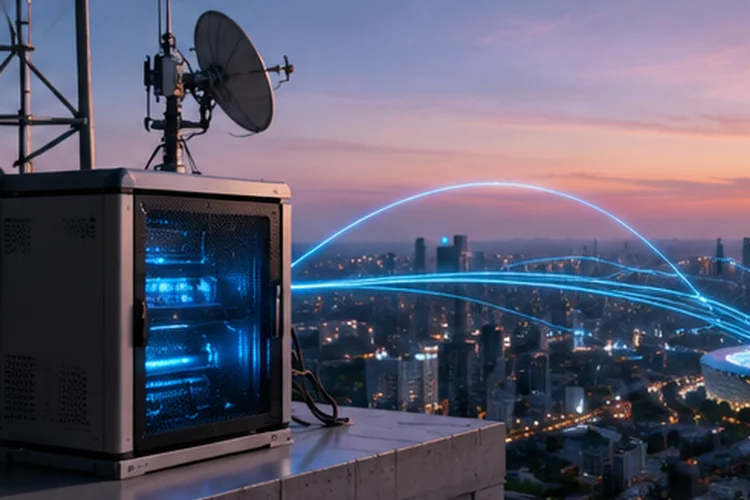
Designing Edge Computing around latency-sensitive media helps bring important processing and delivery functions closer to viewers.
Instead of depending entirely on distant cloud infrastructure, developers can distribute selected workloads across regional and edge locations. The challenge is knowing which operations belong near users and which should remain centralized.
Understand Where Media Latency Comes From
Before adding edge servers, identify what actually causes the delay. A live media pipeline typically includes video capture, encoding, transmission, packaging, distribution, buffering, and decoding.
Every stage introduces processing time. Moving a server closer to viewers may reduce network delay, but it cannot automatically eliminate slow encoding or excessive player buffering.
Build an End-to-End Latency Budget
Imagine a hypothetical livestream with 30 milliseconds of capture delay, 20 milliseconds for encoding, 35 milliseconds of network transport, 25 milliseconds of buffering, and 10 milliseconds for decoding.
That creates a simplified one-way delay of 120 milliseconds, excluding additional processing stages. The numbers are illustrative, but the exercise shows why latency must be measured across the complete delivery chain.
Measure each component seperately before investing in additional infrastructure. Otherwise, a team might spend money on edge capacity while the real problem remains inside the video player.
Place the Right Processing Tasks at the Edge
Not every media workload needs to run close to the audience. Lightweight request handling, regional stream distribution, session routing, and certain interactive services are strong candidates for edge deployment.
AWS Wavelength, for example, places compatible compute and storage resources within telecommunications provider networks. Its architecture is intended for workloads requiring low latency or greater edge resilience.
Keep Centralized Services Where They Make Sense
Account management, historical analytics, and long-term video storage can often remain in regional cloud infrastructure.
Consider a virtual conference serving audiences across multiple continents. The platform might handle session management centrally while delivering video and routing time-sensitive interactions through geographically appropriate infrastructure.
This hybrid approach reduces unnecessary duplication. It also prevents edge deployments from becoming expensive copies of the entire backend.
Choose Streaming Protocols Based on Interaction Needs
Different experiences require different latency targets. A prerecorded interview doesn’t need the same delivery strategy as a live auction where bids must reach the host immediately.
Traditional HLS works well for scalable video delivery, while Low-Latency HLS can reduce the delay through more frequent media availability and suitable player behavior.
AWS explains that reducing HLS segment duration can lower latency, although overly aggressive settings may increase buffering or affect efficiency.
WebRTC serves another purpose. Cloudflare’s documentation describes WebRTC-based live delivery for interactive applications requiring very low latency, including gaming and live Q&A.
However, ultra-low latency is not automatically the best choice for every broadcast. Encoding efficiency, recording support, playback compatibility, and operational complexity also matter.
A sensible architecture selects the protocol according to the actual audience experience rather than chasing the lowest possible number.
Use Edge Caching Without Delivering Stale Content
Content delivery networks reduce repeated requests to origin servers by storing suitable assets closer to users. This is especially valuable for event websites, thumbnails, manifests, and reusable media segments.
However, live content creates different caching requirements from static assets. A newly generated segment should become available quickly, while outdated information must not remain in circulation.
Amazon CloudFront Functions can perform lightweight request processing at edge locations, including URL rewriting, request validation, and cache-key normalization.
For example, an event platform might normalize unnecessary query parameters so equivalent requests reuse the same cached resource.
Choose cache lifetimes carefully and test how quickly new media becomes visibile. Overly aggressive caching can improve efficiency while accidentally increasing live playback delay.
Build Resilience Into Distributed Media Delivery
Edge infrastructure introduces more locations to monitor and maintain. A deployment that works perfectly in one region may struggle when traffic suddenly increases elsewhere.
Prepare fallback routing, regional capacity checks, and sensible connection timeouts. Keep critical session information available even when one delivery location becomes unhealthy.
Imagine an international product launch where thousands of viewers join within a few minutes. The platform should distribute load without requiring every new viewer to contact an overloaded central service.
Make failover behavior predictable rather than relying on manual intervention. A brief quality reduction may be preferable to a complete playback interruption.
Test these scenarios regularly because infrastructure reliablity depends on how the system behaves during failures, not only during normal traffic.
Monitor Real Viewer Experience Instead of Server Speed
A fast server response does not guarantee smooth playback. Users may still experience delayed startup, repeated buffering, or unstable video quality because of local network conditions.
Track startup time, rebuffering, playback latency, stream errors, and regional performance differences. Compare these measurements with application-level interaction delays when appropriate.
AWS CloudFront real-time access logs can provide request-level delivery information within seconds. These records help teams investigate performance patterns, although they do not replace player-side quality measurements.
For a live sporting event, compare playback behavior during ordinary moments and sudden audience spikes. Evaluate results across devices and connetion types before changing the distribution architecture.
Use the findings to improve the highest-impact bottlenecks first.
Designing Edge Computing for latency-sensitive media means improving the complete delivery journey, not simply moving servers closer to viewers.
Effective workload placement, appropriate streaming protocols, intelligent caching, and reliable monitoring all contribute to responsive experiences.
Start by measuring your current end-to-end latency, identify the largest bottleneck, and test one targeted edge improvement before expanding your infrastructure.